
Imagine living in a farmhouse where every drop of rain is put to good use instead of going to waste. That's exactly what a rainwater harvesting system does — it collects rainwater, filters it, and stores it for everyday use or allows it to recharge groundwater naturally.
As water scarcity becomes a growing concern, rainwater harvesting is no longer just an eco-friendly option. It's a practical solution for building a sustainable farmhouse that is prepared for the future.
What Is a Rainwater Harvesting System?
A rainwater harvesting system is a simple yet effective way of collecting rainwater from rooftops or other surfaces. Instead of letting rainwater flow away, it is filtered and either stored in tanks or directed into the ground to improve groundwater levels.
The stored water can be used for:
- Watering gardens and landscapes
- Irrigating crops
- Cleaning outdoor spaces
- Livestock and cattle care
- Toilet flushing
- Recharging groundwater

This makes it an essential feature of any sustainable farmhouse.
Why Every Sustainable Farmhouse Should Have One
A sustainable farmhouse is designed to make the best use of natural resources. Rainwater harvesting plays a major role in achieving that goal.
Some of the key benefits include:
- Reduces dependence on borewells and external water sources
- Ensures water availability during dry seasons
- Supports farming and gardening throughout the year
- Helps recharge groundwater naturally
- Lowers long-term water expenses
- Promotes responsible water conservation
- Creates a more self-sufficient farmhouse
When combined with solar power, natural ponds, organic farming, and mini forests, rainwater harvesting becomes part of a complete sustainable living system.
Main Components
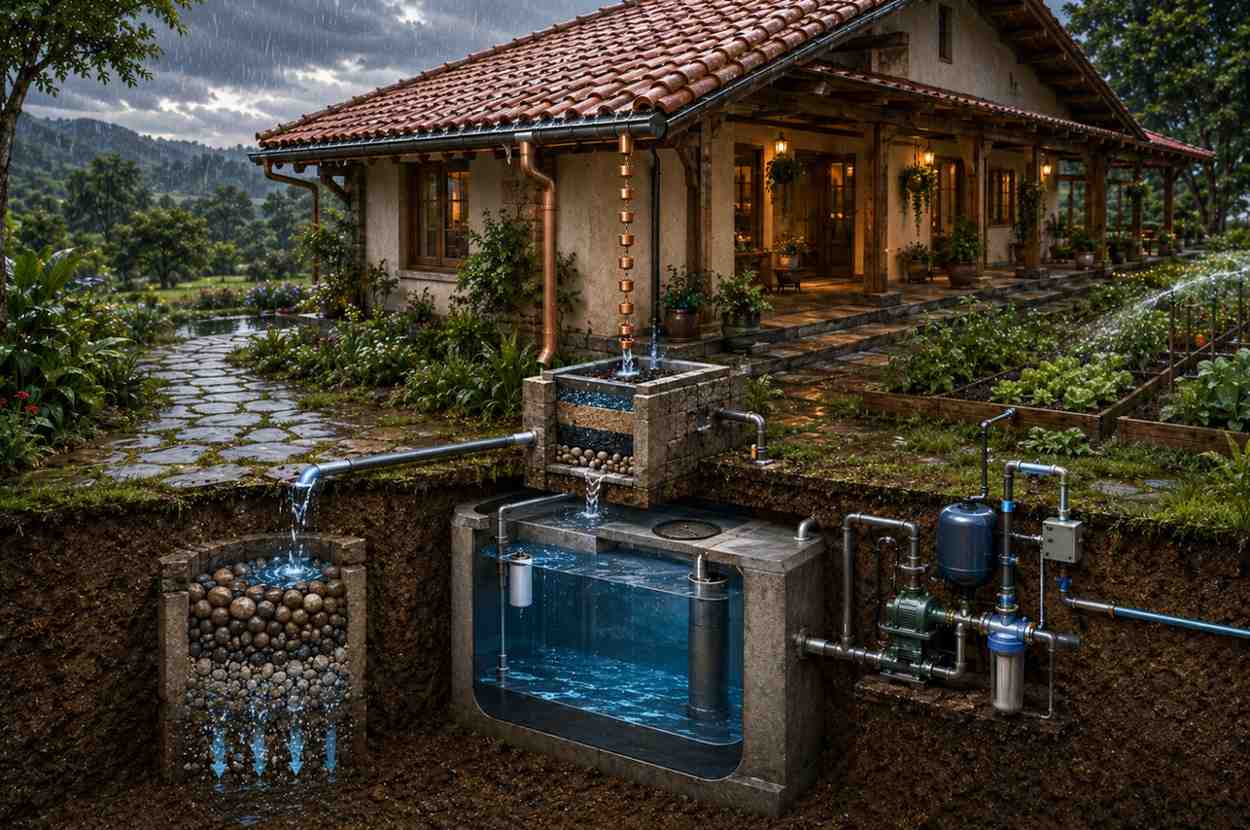
Every rainwater harvesting system consists of several important parts that work together.
Catchment Area
The roof acts as the collection surface where rainwater is first captured.
Gutters and Downpipes
These channels carry rainwater from the roof to the filtration unit.
Rainwater Collection Filter
The rainwater collection filter removes leaves, dust, and other debris before the water enters the storage tank.
Storage Tank
Filtered rainwater is stored safely for future use.
Recharge Pit
Any excess water is directed into a recharge pit, allowing it to seep into the ground and improve groundwater recharge.
Distribution System
Pumps and pipelines distribute the stored water wherever it is needed around the farmhouse.
System Design
An efficient rainwater harvesting system design is based on several factors, including:
- Annual rainfall
- Roof size
- Water requirements
- Storage capacity
- Soil conditions
- Groundwater recharge potential
A properly designed system captures more water and requires less maintenance over time.
Installation Steps
Installing a rainwater harvesting system involves several stages:
- 1Site inspection
- 2Roof assessment
- 3System design
- 4Installation of gutters and pipelines
- 5Filter installation
- 6Storage tank setup
- 7Recharge pit construction
- 8Final testing
Professional installation ensures the system performs efficiently and lasts for many years.
System Cost
The rainwater harvesting system cost depends on several factors, such as:
- Roof area
- Storage tank size
- Type of filtration system
- Pipeline layout
- Recharge pit construction
- Installation requirements
While the initial investment varies, the long-term savings on water bills and improved water availability make it a worthwhile investment.
Benefits of Rainwater Collection
Installing a rainwater harvesting system offers several long-term advantages:
- Conserves water naturally
- Reduces dependence on groundwater
- Supports farming activities
- Provides water during dry months
- Reduces water bills
- Improves groundwater recharge
- Increases property value
- Promotes sustainable living
Rainwater and Water Conservation
Water conservation is becoming increasingly important, especially in areas facing water shortages.
A rainwater harvesting system helps conserve water by collecting and reusing rainfall instead of allowing it to run off. It also supports groundwater recharge, making more water available for future use.
For sustainable farmhouses, this means better water security while protecting the environment.

Frequently Asked Questions
Q.What is a rainwater harvesting system?
A rainwater harvesting system collects rainwater, filters it, and stores it or directs it into the ground for future use.
Q.What are the main components of a rainwater harvesting system?
The main components include the catchment area, gutters, filters, storage tanks, recharge pits, and distribution pipelines.
Q.Is rainwater harvesting suitable for sustainable farmhouses?
Yes. It provides a reliable water source, supports farming activities, and reduces dependence on external water supplies.
Q.Does rainwater harvesting improve groundwater levels?
Yes. Recharge pits allow excess rainwater to seep into the soil, helping replenish groundwater naturally.
Q.Is installing a rainwater harvesting system worth the investment?
Yes. It reduces water costs, improves water availability, and adds long-term value to your farmhouse.
Conclusion
A rainwater harvesting system is more than just a water-saving solution. It is an investment in a smarter and more sustainable way of living.
Whether you're planning a new farmhouse or upgrading an existing one, incorporating rainwater harvesting can help reduce water waste, improve groundwater recharge, and support a healthier environment. When combined with solar energy, organic farming, natural ponds, and other sustainable features, it creates a farmhouse that is efficient, resilient, and built for the future.
Ready to Build a Sustainable Farmhouse?
Talk to our team about rainwater harvesting, solar integration, and other systems tailored to your land.